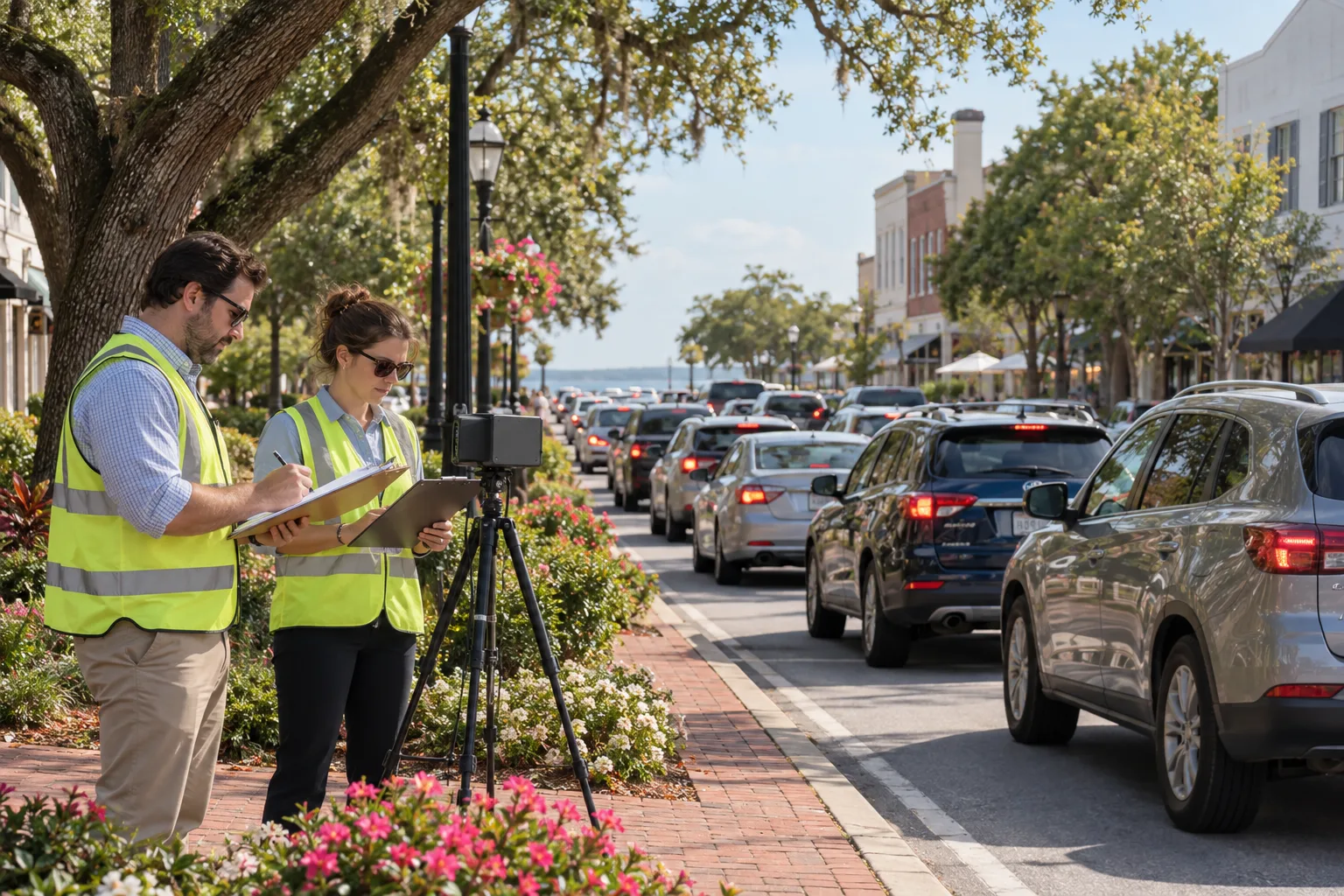
FAIRHOPE, AL — Fairhope officials have received the results of a fictional $175,000 transportation study commissioned to determine why residents continue complaining about traffic.
After six months of vehicle counts, community surveys, intersection observations and professionally formatted presentations, consultants reached a preliminary conclusion: there are more people in Fairhope now, and many of them have cars.
“The relationship was difficult to detect because the cars were frequently obscured by other cars,” said fictional consultant Grant Gridlock of Threadcount Mobility Partners. “But once we adjusted for seasonal complaining, the pattern became clear.”
The 184-page report, titled Regional Vehicular Sentiment and Delay Experience Assessment, found that traffic complaints increase most sharply when residents are in traffic.
Complaints decline when residents reach their destination, then rise again when they attempt to leave it.
Measuring the frustration
Researchers evaluated nine intersections, 14 turn lanes and one driver who remained motionless through an entire green light while looking at a phone.
The study identified three primary causes of congestion:
- People driving into Fairhope.
- People driving out of Fairhope.
- People already in Fairhope attempting to move to a different part of Fairhope.
Consultants also confirmed that nearly every driver considers their own trip necessary and most other vehicles evidence of irresponsible growth.
“Residents were extremely consistent,” Gridlock said. “Each person reported that traffic would improve substantially if everyone else made different plans.”
The report recommends additional signage, updated signal timing and a public-awareness campaign reminding drivers that the line of vehicles ahead of them is composed largely of other residents wondering who caused all the traffic.
Officials praised the study for converting a widely visible condition into a professionally bound finding.
“People told us there were too many cars,” said fictional city mobility liaison Lane Merge. “Now we have the data necessary to say there are a statistically significant number of cars.”
A proposed second phase would examine where the vehicles are going and why so many of them seem determined to arrive at the same place at 5:15 p.m.
That study is expected to cost $225,000 and recommend a third study.
The study identified the problem
Traffic.