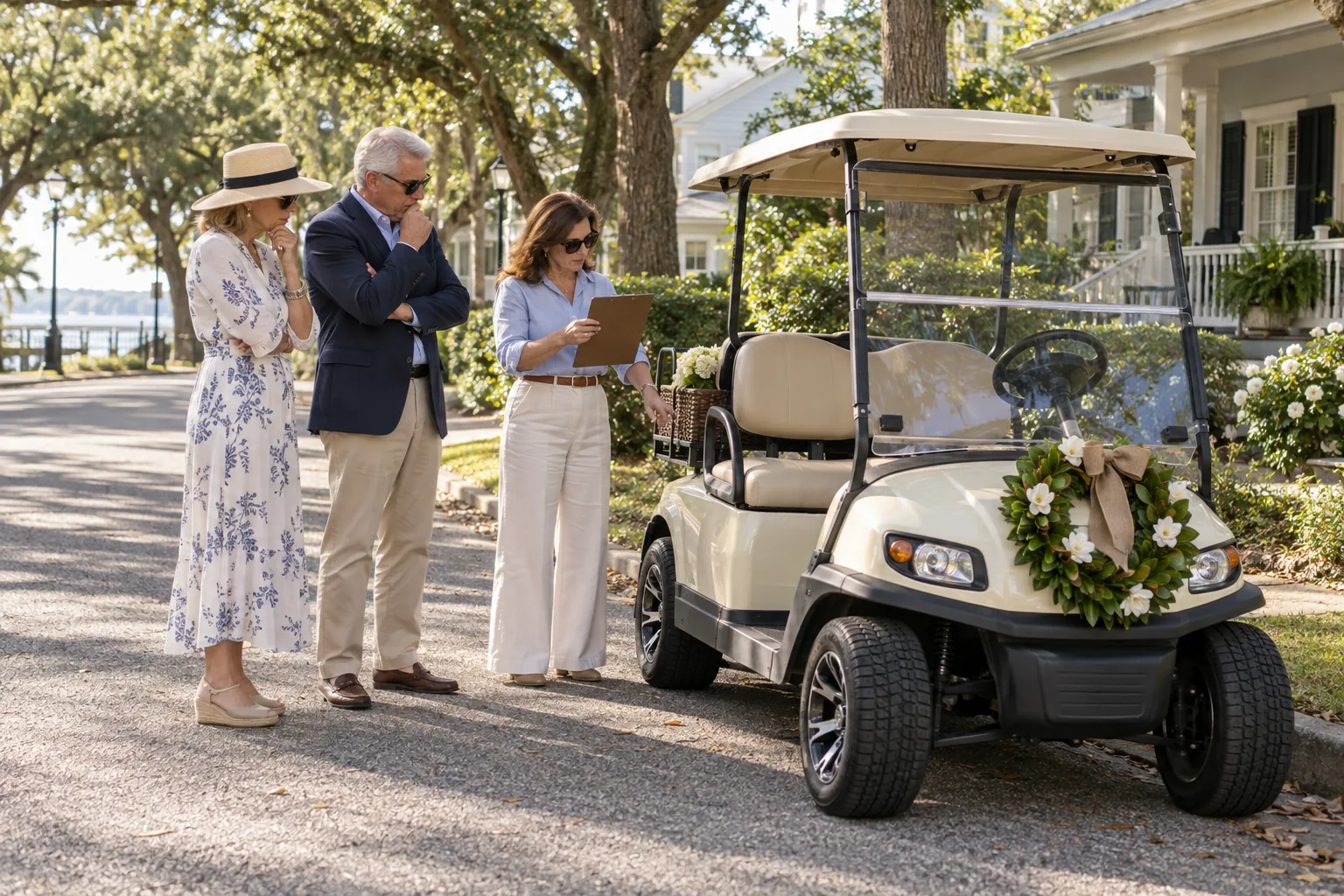
FAIRHOPE, AL — Fairhope officials announced Tuesday that the golf cart has been formally classified as transportation, recreational equipment and a protected cultural institution, ending years of uncertainty surrounding the vehicle's proper role in civic life.
The determination came after planners attempted to decide whether golf carts should follow automobile regulations, neighborhood rules or the customs traditionally governing linen pants.
“We initially approached this as a transportation question,” said fictional mobility consultant Chip Fairway. “Then residents explained that their golf cart has a name, a seasonal wreath and its own parking space. At that point, we realized we were dealing with heritage.”
Under the proposed classification system, a golf cart may be considered a motor vehicle while traveling, patio furniture while parked and formal attire when arriving at a neighborhood gathering.
A vehicle with responsibilities
Operators must continue observing all applicable traffic rules, except when waving to someone they know, adjusting a Bluetooth speaker or briefly stopping in the middle of the street to discuss where everyone is headed.
Carts displaying collegiate flags may receive an additional five miles per hour of emotional authority during football season.
Officials also established three recognized categories:
- Transportation Golf Cart: Used to reach a specific destination.
- Lifestyle Golf Cart: Used to leave the house without committing to a destination.
- Heritage Golf Cart: Has remained in the family since at least the construction of the neighborhood clubhouse.
Residents seeking historic designation must submit photographs demonstrating that the cart has participated in no fewer than three holiday parades and one event involving matching beverage containers.
Debate became tense when commissioners considered requiring turn signals.
Several residents argued that a raised coffee cup, vague hand gesture or prolonged eye contact already communicates most intended maneuvers.
“Our community has managed golf-cart traffic for years using instinct and small waves,” said fictional resident Marcy Links. “Introducing lights would remove the human element.”
The final recommendation protects golf carts from being treated exclusively as vehicles while preserving the city's ability to describe them as vehicles whenever one is parked somewhere inconvenient.
A ceremonial marker will be placed beside the first cart to receive cultural recognition, provided nobody needs the space.
Transportation, recreation or a way of life?
Fairhope's official answer is yes.